






















Stackable Battery System: Why It's the Future of Home Storage


Get notified about new updates, products, tips and tutorials. No spam.
Modern residential energy systems need to adapt as household electricity demand grows with solar PV, EV charging, smart appliances, and changing energy tariffs. A stackable high-voltage LiFePO4 home battery system provides a flexible way to expand storage capacity without redesigning the entire installation.
For homeowners, installers, and system integrators, stackable architecture combines space efficiency, high-voltage operation, modular expansion, inverter compatibility, and long-term upgradeability, making it increasingly suitable for future-ready residential energy storage.

Why Stackable Battery Systems Fit Changing Home Energy Needs
Residential electricity demand is becoming more dynamic as households adopt EV chargers, heat pumps, smart appliances, and larger solar PV systems. Fixed-capacity battery systems can become restrictive when energy demand grows beyond the original installation design.
A stackable battery system addresses this challenge through modular expansion. Instead of replacing the entire battery system, homeowners can add compatible battery modules as their energy requirements increase.
This architecture gives installers greater flexibility during initial system design while helping homeowners avoid unnecessary oversizing. Capacity can be configured around current demand and expanded later as household energy use evolves.
High-Voltage Architecture and Efficient Power Transfer
High-voltage battery architecture can improve electrical efficiency by reducing the current required to transfer the same amount of power. Lower current can help reduce resistive losses and thermal stress within the electrical pathway.
This makes high-voltage storage particularly suitable for households with higher power demand, larger PV systems, or equipment such as EV chargers and heat pumps.
High-voltage battery systems can also integrate efficiently with compatible hybrid inverters, reducing the need for additional voltage conversion stages in suitable system architectures. The final system design should always follow the inverter operating range, battery specifications, and local electrical requirements.
Vertical Stacking Saves Space and Simplifies Expansion
Floor space is often limited in residential garages, utility rooms, and technical areas. Expanding battery capacity horizontally can occupy valuable space and make future maintenance or equipment access more difficult.
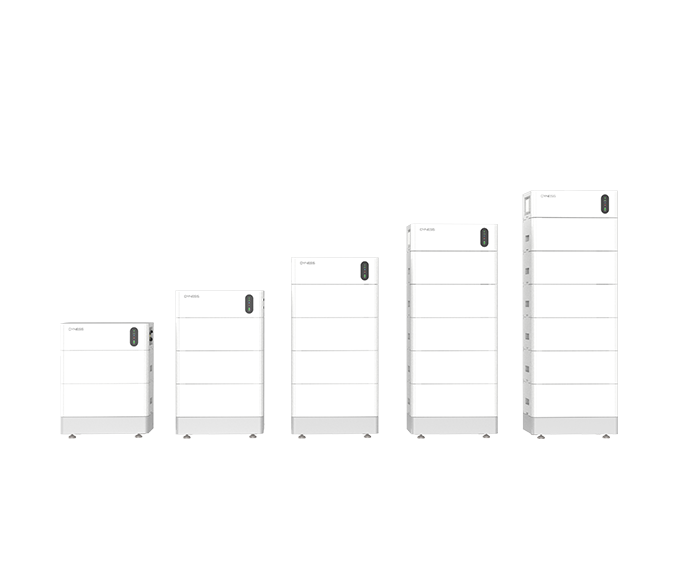
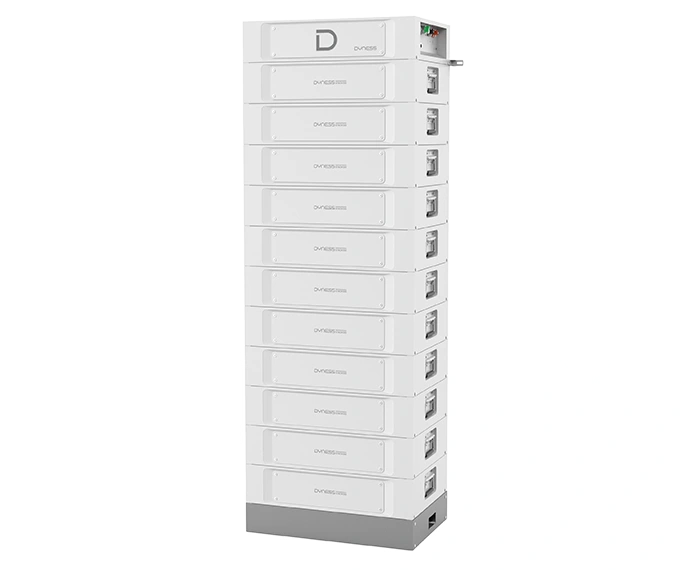
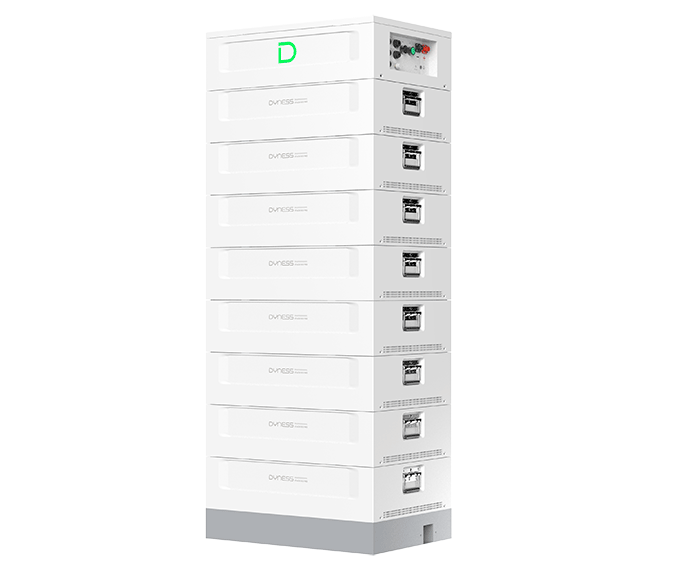
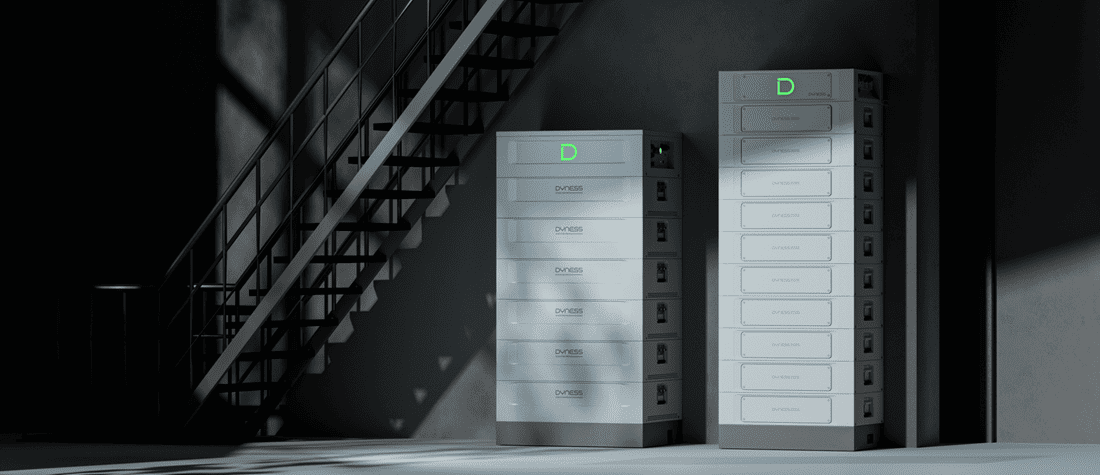
Vertical stacking solves this problem by using height rather than additional floor area. Individual battery modules can be added within a compact footprint, making the system easier to integrate into different residential environments.
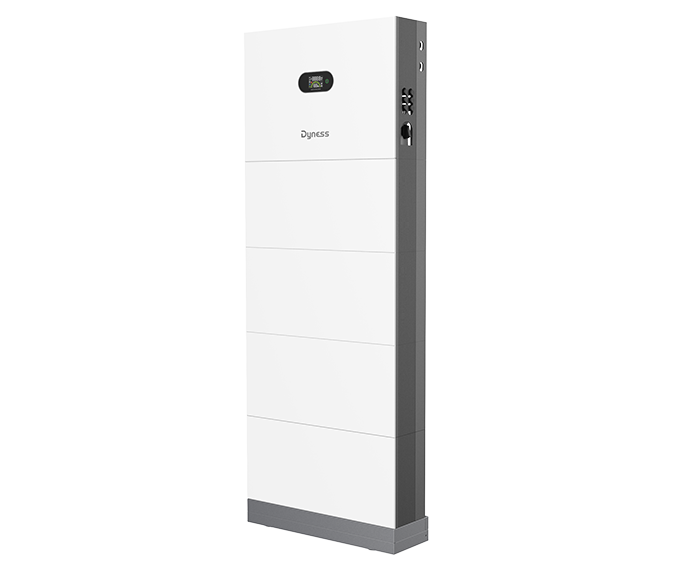
The Dyness Tower Pro series uses a Modular Adaptive Stacking Design and provides a nominal capacity range from 7.68 kWh to 23.04 kWh. This allows installers to configure different capacity levels according to household load profiles while maintaining a clean and compact installation layout.

LiFePO4 Safety, Inverter Compatibility, and System Reliability
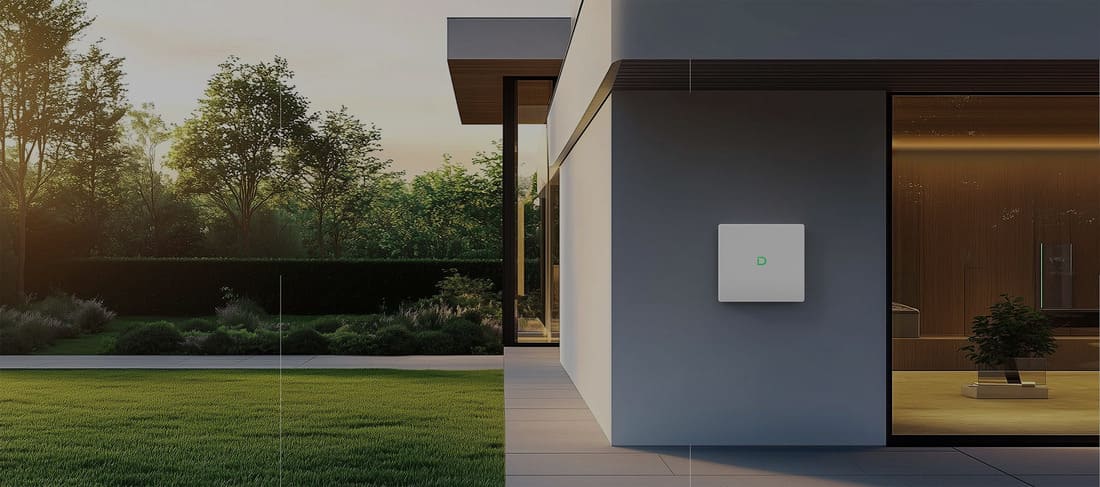
Battery chemistry is an important consideration for residential storage systems installed close to living spaces. Lithium iron phosphate chemistry provides strong thermal stability and structural resilience, making it widely used in stationary energy storage applications.
Stable cell chemistry helps support repeated charging and discharging cycles while reducing the risk of thermal instability under normal operating conditions.
System reliability also depends on communication between the battery management system and the inverter. Mismatched communication protocols can affect charging, discharging, state-of-charge reporting, and protection functions.
Dyness designs its stackable high-voltage LiFePO4 home battery systems to support compatibility with major global inverter brands, helping installers reduce integration complexity and streamline field commissioning.
Lower Lifecycle Costs and Future-Ready Expansion
The long-term value of a home battery system depends on more than the initial purchase price. Maintenance requirements, capacity expansion, component replacement, system compatibility, and future household energy demand all affect the total lifecycle cost.
Modular architecture provides an economic advantage because capacity can be expanded incrementally rather than replacing the entire system when demand grows. Individual modules can also be serviced or replaced more flexibly where the product architecture and technical requirements allow.
As EV adoption, dynamic electricity tariffs, home electrification, and smart energy management continue to develop, upgradeable storage infrastructure can help reduce the risk of premature system obsolescence.
Dyness also provides OEM and ODM services for B2B partners requiring customized stackable battery solutions, including adaptations for enclosure design, interfaces, communication requirements, branding, and regional market needs.
Conclusion
Stackable battery systems provide a practical combination of high-voltage efficiency, modular scalability, compact installation, stable LiFePO4 chemistry, and long-term upgradeability for modern homes.
The Tower Pro series offers a 7.68 kWh to 23.04 kWh capacity range through a Modular Adaptive Stacking Design, allowing installers to match storage capacity with different residential energy requirements.
For homeowners, installers, and distributors, an adaptable stackable battery platform can support growing household loads, solar self-consumption, backup power, and future energy upgrades without requiring a complete system redesign.
FAQ
-
Q: Can a Plug-in Balcony ESS automatically decide when to charge?

A: Systems with automatic energy management can adjust charging and discharging according to PV generation, household electricity demand, battery status, and system settings. Specific functions depend on the product configuration.
-
Q: Can I add a Dyness battery to my existing solar system?
A: It may be possible, but compatibility depends on the existing inverter, system architecture, battery configuration, metering, wiring, and local requirements. A professional assessment is recommended before purchase.
-
Q: How long does it take to install a Dyness home energy storage system?
A: There is no single fixed time. A standard installation with compatible equipment and suitable site conditions can usually be completed more efficiently, while projects requiring electrical upgrades, inverter replacement, backup circuit design, or permitting may take longer.
Learn More