























Dyness DH200Y 1.6 MWh Solar Storage Project Deployed at CoolHouse Cold Chain Logistics Park in Bulgaria
-
Company News
-
 2026-09-11
 -
 Dyness

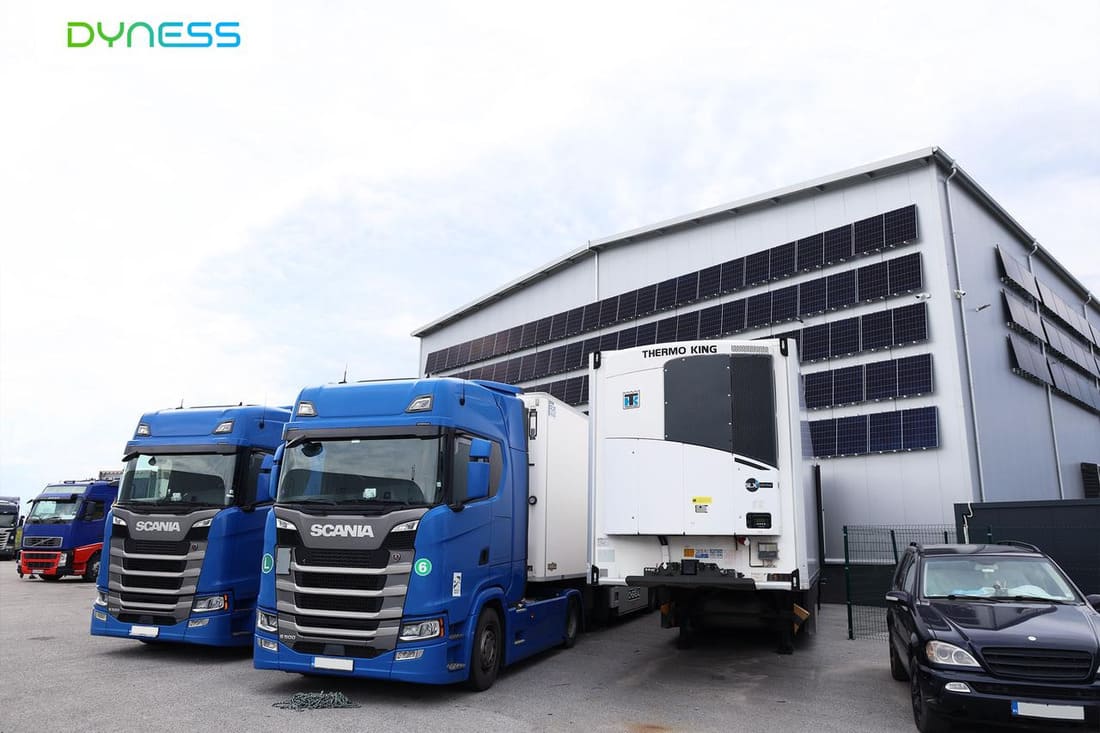
As the cold chain industry continues to drive up electricity demand and the growing penetration of solar power creates new challenges for renewable energy utilization, CoolHouse, a cold chain logistics park in Sofia, Bulgaria, has deployed seven Dyness DH200Y energy storage systems with a total capacity of 1.6 MWh. Working in coordination with the site’s 1.6 MW PV system, the project creates an integrated solar-plus-storage solution tailored to the energy needs of the facility.
By increasing solar energy utilization and optimizing electricity costs, the project demonstrates a more efficient energy management approach for energy-intensive commercial and industrial applications, including cold chain logistics.

High energy consumption in the cold chain poses challenges for integrating solar power
CoolHouse is a modern cold storage and logistics center located in Sofia, Bulgaria, specializing in multi-temperature zone precision-controlled warehousing, cold chain transport, and value-added logistics services. As the cold store’s refrigeration, temperature control systems, automated equipment, and logistics facilities require continuous, long-term operation, the site is characterized by high electricity consumption and a consistently heavy load.
Meanwhile, as the adoption of photovoltaic (PV) technology continues to expand, CoolHouse has installed a 1.6 MW PV system in the hope of further utilizing clean energy to reduce the site’s electricity costs. However, PV generation is characterized by significant temporal fluctuations: during the day, when PV output is high, electricity generation may exceed the site’s immediate demand at certain times; conversely, during periods when PV output declines, the site still needs to purchase electricity from the grid.
This ‘temporal mismatch between PV generation and load demand’ has become the primary challenge to improving PV utilization rates. To address these issues, CoolHouse has introduced an energy storage system to resolve the following three key challenges:
Firstly, enhancing PV absorption capacity. Excess PV electricity that cannot be consumed immediately during daytime peak loads is stored, reducing waste and releasing it during subsequent consumption periods, thereby increasing the rate of self-generation and self-consumption.
Secondly, optimizing peak-valley electricity consumption. By charging and discharging at appropriate times based on the park’s load and fluctuations in peak and off-peak electricity tariffs, the system reduces the amount of electricity purchased from the grid during peak periods, thereby lowering overall electricity costs.
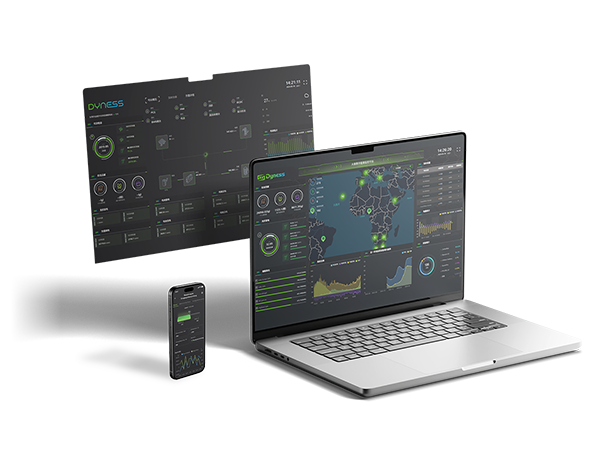
Thirdly, optimizing energy management. Through an intelligent energy management system, the system coordinates the scheduling of solar power, energy storage, and the load, dynamically optimizing charging and discharging strategies based on actual energy consumption to enhance the park’s overall energy efficiency.
DH200Y Meets the High-Reliability Energy Needs of Cold Chain Operations
To address CoolHouse’s requirements regarding PV energy utilization, cost optimization, and long-term energy management, Dyness’s DH200Y—characterized by high safety, high integration, and high flexibility—provides a tailored solution for grid-connected energy storage in cold chain logistics parks.
Regarding safety, cold chain environments impose extremely rigorous demands on the intrinsic safety of energy storage systems. The DH200Y utilizes Lithium Iron Phosphate (LFP) cells known for their excellent thermal stability. The system establishes a multi-layered safety protection framework by integrating pack-level cell temperature monitoring, a three-level fire protection linkage system, and an active pressure-relief/explosion-proof design. Intelligent liquid cooling for temperature control, combined with air cooling for the Power Conversion System (PCS), effectively slows cell degradation and reduces the risk of thermal runaway. The unit boasts an IP55 protection rating and C5-level corrosion resistance, ensuring stable, long-term operation even when installed outdoors in the challenging climatic conditions typical of cold storage facilities.
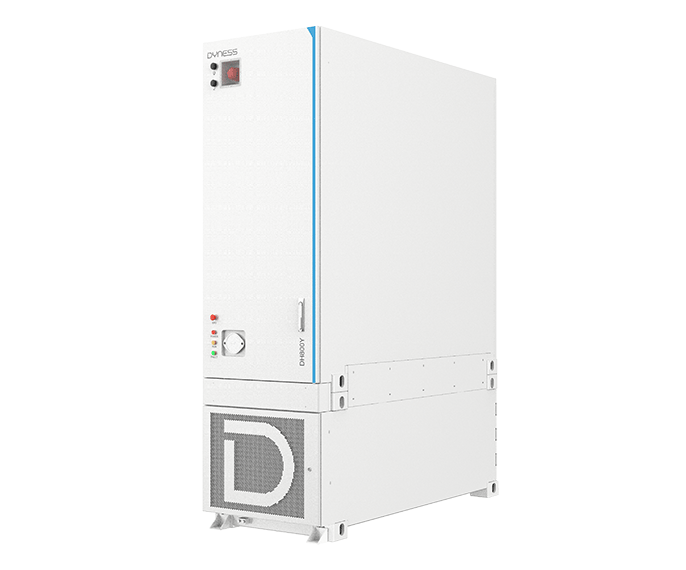
In terms of system configuration, the project required compatibility with an existing 1.6 MW PV installation while allowing for future capacity expansion. Each DH200Y cabinet offers a rated capacity of 232 kWh with a footprint of only 1.58 m²—achieving an energy density of 147 kWh/m²—and supports the parallel connection of up to ten units. This project deploys seven units in parallel to achieve a total installed capacity of 1.6 MWh, fully meeting the need to store surplus energy generated during peak PV production periods.

Regarding operational strategy, the system employs a "charge during off-peak, discharge during peak" (peak-shaving and valley-filling) approach. This significantly boosts the self-consumption rate of PV-generated power and effectively reduces grid electricity costs. After meeting the electricity demands of the warehouse and logistics departments, surplus power can be sold to the market, further unlocking the economic value of the energy storage system.
Based on project operating parameters and typical peak-valley price differentials in Bulgaria, the system is projected to deliver an annual discharge volume of approximately 576 MWh. Peak-valley arbitrage revenue is estimated at €51,800–€95,000 per year (with a neutral scenario of €73,000/year), and the 10-year Internal Rate of Return (IRR) is approximately 16.8%. Integrated with an intelligent management system, the DH200Y enables real-time operational monitoring and dynamic optimization of energy strategies. It functions not merely as an energy storage unit but as a pivotal energy-balancing hub connecting photovoltaic (PV) generation, campus loads, and the grid or electricity market, thereby facilitating the synergistic optimization of PV consumption, peak-shaving and valley-filling, and electricity trading.
According to follow-up interviews, the project launched approximately a year and a half ago with an initial deployment of seven battery units. The system has performed well during continuous operation, and the client is highly satisfied with the installation; plans are already in place to add another seven units of the same model to further expand storage capacity. This sustained investment—spanning from initial operation to planned expansion—reflects the client's recognition of the project's value. It also enables CoolHouse to meet current energy needs while building a future-oriented, flexibly scalable smart energy system.
From Project Implementation to a New Paradigm for Energy Transition
The significance of the CoolHouse project lies not only in effectively increasing the PV integration rate within cold-chain parks, but also in pioneering a new energy management model based on the coordinated operation of ‘PV + energy storage + load’.
For energy-intensive commercial and industrial sectors such as cold-chain logistics, food processing and manufacturing, as the installed capacity of photovoltaic systems continues to rise, the question of how to further improve the utilisation rate of green electricity and reduce electricity procurement costs during peak periods is gradually becoming a key challenge in energy management.
In the future, as energy market mechanisms in Bulgaria and across Europe continue to mature, the application value of commercial and industrial energy storage will extend beyond PV integration and peak-valley optimisation to encompass a wider range of scenarios, including demand response, capacity management and electricity market services. At the product level, Dyness continues to drive product iteration and upgrades. The launch of the DH200Y-C260, an upgraded version of the DH200Y, will further enhance system performance and deployment flexibility, thereby continuing to strengthen the technological foundation for large-capacity energy storage applications in high-energy-consumption scenarios.

Undoubtedly, the CoolHouse project will serve as a flagship demonstration in South-Eastern Europe for promoting the integration of solar power and energy storage and enhancing energy efficiency, thereby providing valuable, replicable experience for a wider range of industrial enterprises. Dyness will continue to deliver safer, more efficient and smarter energy solutions through scenario-based innovation and technological iteration, working hand in hand with industry partners to drive the global energy transition to greater depths.