




















Whole Home Battery Backup Systems: What You Need to Know


Get notified about new updates, products, tips and tutorials. No spam.
Choosing whole home battery backup systems requires more than comparing battery capacity. Two households with the same amount of stored energy may have very different backup requirements, depending on which appliances need electricity, how many operate simultaneously, and how long power must remain available during an outage.
A reliable home backup plan should consider two separate requirements: the power needed to operate connected appliances and the energy required to support them over time. Understanding these power and energy budgets helps homeowners and installers evaluate battery capacity, inverter compatibility, load priorities, and installation conditions before selecting a residential battery backup solution.
Understanding Power Requirements for Whole Home Battery Backup
Designing whole home battery backup systems begins with identifying the electrical appliances that may operate simultaneously. Refrigerators, lighting, communication equipment, heating or cooling systems, and other household devices have different power requirements. Some operate continuously, while others run intermittently or require additional power during startup. A daily electricity consumption figure alone cannot describe these simultaneous demands.
The power budget represents the combined electrical demand that the backup system must support at a particular moment. Homeowners and installers should identify which appliances are expected to operate together, their continuous power requirements, and any short-duration startup demands. These values help establish the output capability required from the inverter and other conversion equipment.
Battery-side electrical limits must also be considered. A battery may contain enough stored energy for several hours of operation but still be unable to support the required instantaneous demand through an incompatible inverter or insufficient discharge capability. The electrical assessment should therefore connect household AC loads with inverter output ratings, battery voltage, and permitted DC discharge current.
For residential battery backup applications, a suitable power budget helps define which circuits can receive backup electricity and which combinations of appliances may need to be restricted. This approach makes the expected operating arrangement clearer than assuming that a battery automatically provides unrestricted power to every household circuit.

Calculating Energy Requirements and Backup Duration
While the power budget determines how much electricity is needed at a given moment, the energy budget determines how much stored electricity is required over the intended backup period. Energy consumption depends on both the power demand of an appliance and its operating duration. A device that consumes 500 W for two hours uses approximately 1 kWh of electrical energy, before accounting for conversion losses and other system conditions.
For whole home battery backup systems, each essential appliance should be evaluated according to its expected operating period. Refrigeration equipment may run intermittently, while communication devices and selected lighting may need to remain available for longer periods. Adding the energy requirements of these loads provides a starting point for estimating the household's total backup energy demand.
The available supply period also depends on usable battery energy, reserve settings, conversion efficiency, and actual electricity consumption. A battery's nominal capacity does not necessarily represent the energy available to household appliances. Usable capacity provides a more relevant battery-side reference, although the amount delivered through an inverter may be lower because of conversion losses and operating limitations.
A system capable of supporting the required instantaneous load may still have insufficient energy for an extended outage. Conversely, a battery with substantial energy capacity may require different conversion equipment to serve demanding appliances. Evaluating power and energy separately helps homeowners identify whether their backup plan is limited by simultaneous electrical demand or the intended operating duration.
Prioritizing Essential Loads and Managing Household Backup Demand
When household electricity demand exceeds the planned backup capability, load prioritization provides a practical way to improve system suitability. Essential appliances can be separated from discretionary loads according to their importance during an outage. Refrigeration, essential lighting, communication equipment, and other necessary services may receive priority, while selected high-consumption activities can be postponed or operated at different times.
Load scheduling can address different constraints. If several appliances operating together exceed the inverter's available output, avoiding simultaneous use can reduce the peak power requirement. If the planned supply period requires more energy than the battery can provide, reducing appliance operating time or limiting nonessential consumption can lower the total energy requirement.
These strategies affect the two budgets differently. Moving an appliance to another operating period may reduce simultaneous power demand without significantly changing total energy consumption. Reducing the duration of appliance operation can lower energy demand, helping preserve stored electricity for essential services.
A clearly documented household backup plan should identify which circuits are included, which appliances may operate simultaneously, and which loads require specific operating conditions. The final arrangement must be checked against the selected inverter, battery configuration, and applicable electrical requirements. This provides a defined backup scope rather than an unsupported assumption of unlimited whole-house coverage.
Matching Dyness PowerBox G2 with Home Backup Requirements
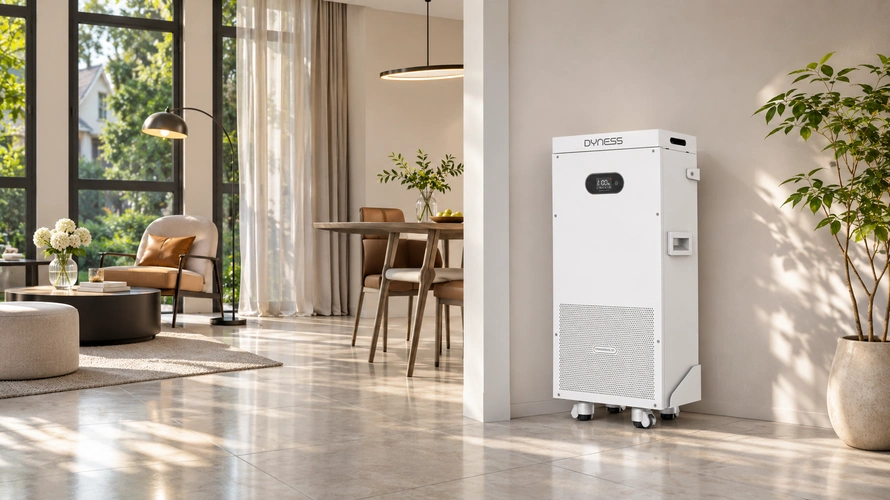
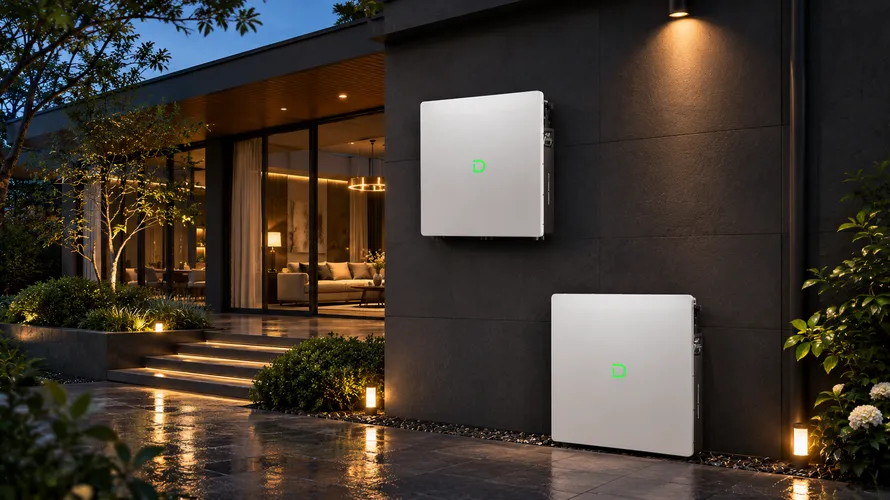
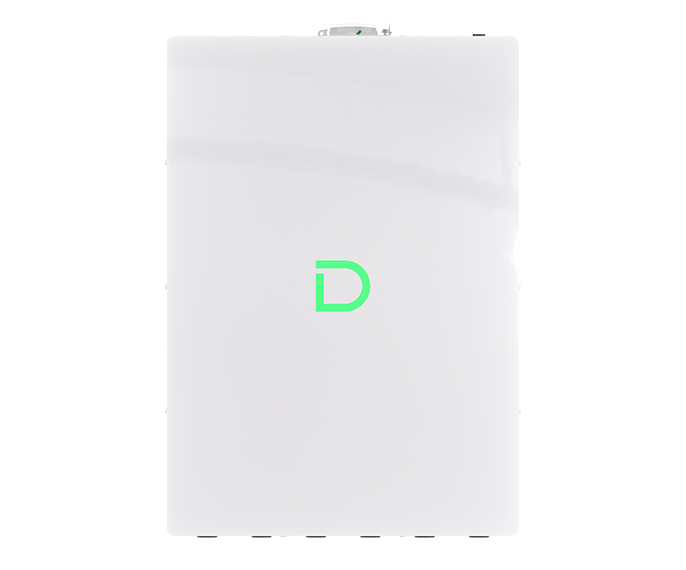
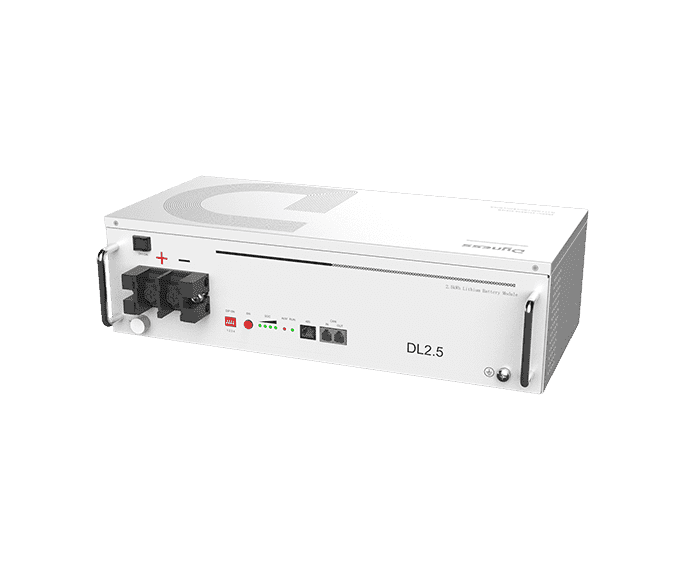
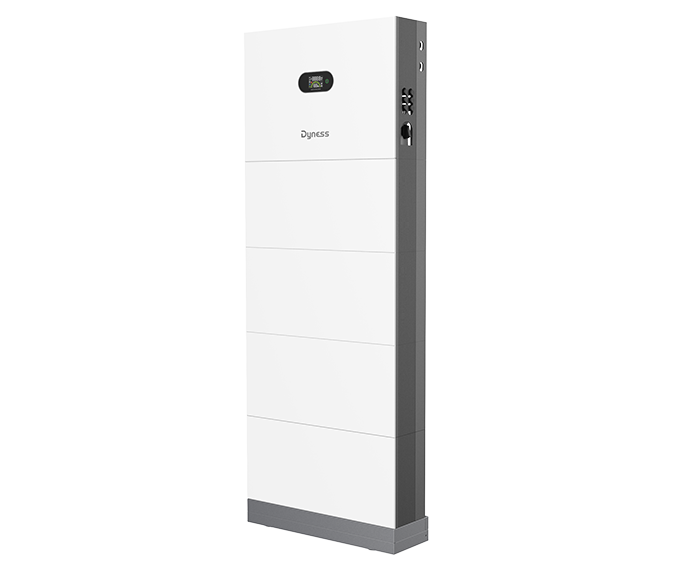
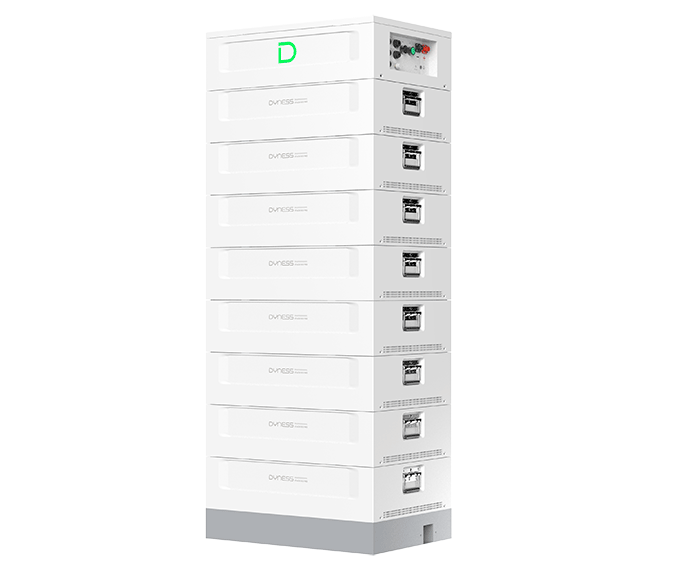
The Dyness PowerBox G2 provides a practical example of how battery specifications contribute to residential backup planning. Each unit offers 10.24 kWh of nominal energy and 9.728 kWh of usable energy at a recommended 95% depth of discharge. Its nominal charging and discharging power is 5.12 kW, while maximum discharge power is 10.24 kW. These figures describe battery-side capabilities and must be matched with compatible external conversion equipment.
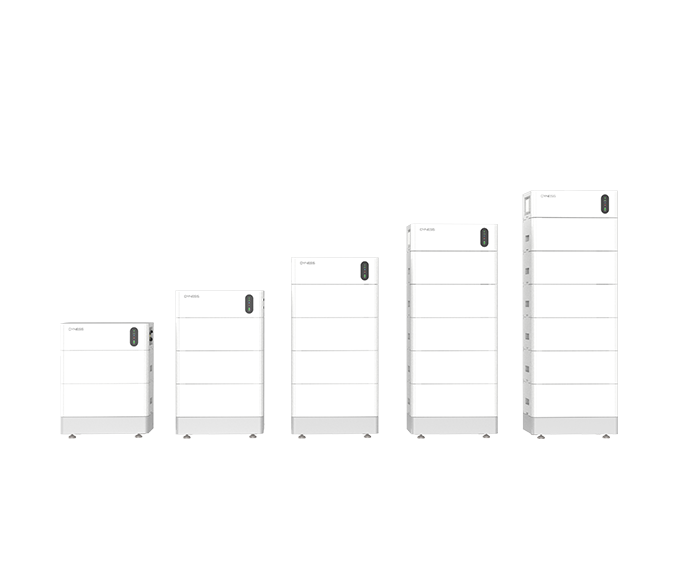
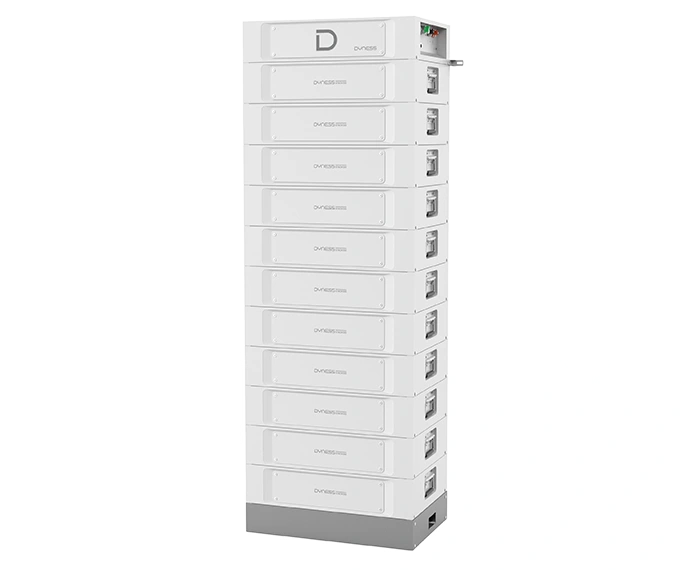
PowerBox G2 supports up to 50 units in parallel, allowing storage capacity to be expanded through an approved modular configuration. However, adding batteries does not automatically establish the AC output available to household circuits. Inverter compatibility, supported electrical parameters, and battery-side DC current requirements must still be verified. The connected equipment's operating current must remain within the battery's specified discharge capability.
Temperature limits are another important consideration. PowerBox G2 supports discharging from -20°C to 55°C. Standard charging is specified from 0°C to 55°C, while the optional heating configuration extends the charging range to -20°C to 55°C. The presence of the heating function must be confirmed for the selected product configuration rather than assumed as standard.
Installation conditions also affect system suitability. PowerBox G2 specifies a relative humidity range of 5-85%, installation elevation not exceeding 4,000 metres, and placement on a flat, level surface. Outdoor installations must avoid direct sunlight, conductive dust, and corrosive gases. Reliable grounding and installation by appropriately trained professionals are required as part of the approved system arrangement.
These product specifications provide information for both the household power budget and the energy budget. Actual whole home battery backup capability depends on the complete system, including the inverter, switching arrangement, connected circuits, and installation conditions. The PowerBox G2 battery should therefore be evaluated as part of a verified backup configuration rather than treated as an independent AC power supply.
Real-World Application: PowerBox G2 in an Off-Grid Alpine Cabin
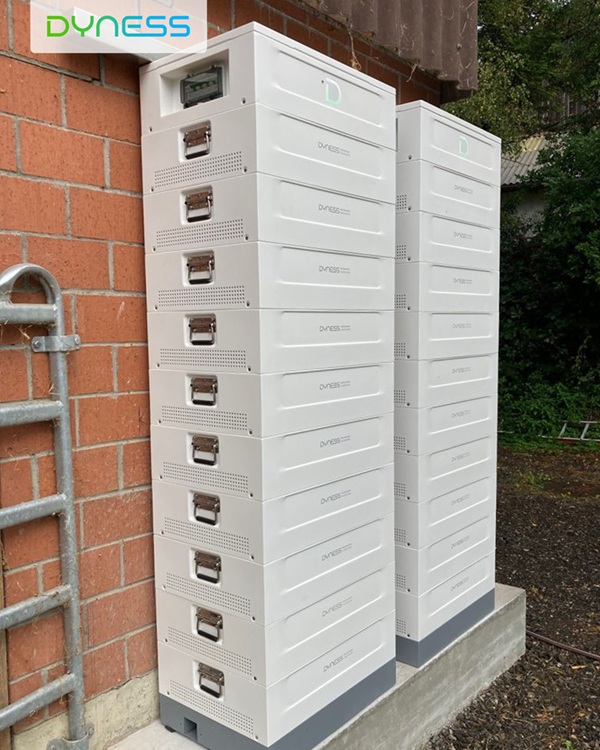
A residential energy storage project completed in January 2026 in the northern Italian Alps demonstrates how defined household loads can guide an off-grid battery installation. Located at approximately 2,000 metres above sea level, the cabin combines Dyness PowerBox G2 battery storage with solar photovoltaic generation to support electricity demand in a remote residential environment.
The system supplies lighting, essential household appliances, and communication equipment. The project was designed to reduce reliance on traditional fuel generators while accommodating the cabin's limited technical installation space. Its configuration supports the identified household loads rather than establishing a universal backup duration or unrestricted whole-home electricity supply.
The installation uses PowerBox G2's 1C discharge capability to help address periods of higher household demand. This example illustrates why instantaneous power requirements and available stored energy must be considered separately. A similar battery capacity installed in another household may support a different range of appliances or operating duration depending on its connected inverter, load profile, and environmental conditions.
PowerBox G2 also supports CAN and RS485 communication, built-in Wi-Fi, app access, and over-the-air (OTA) updates. These features provide monitoring and communication capabilities that can help users and technicians review battery status and system operation. Remote monitoring availability depends on the installed communication infrastructure and network conditions.
The Alpine cabin project highlights an important principle for residential energy storage design: backup performance should be evaluated against specific electricity demands, environmental conditions, and system components. Rather than assuming a fixed runtime based on battery capacity alone, homeowners can use a documented load and energy assessment to establish a more realistic backup plan.
Conclusion
Whole home battery backup systems require careful planning of two separate but connected requirements: instantaneous power demand and stored energy consumption over time. A suitable system must support the selected appliances when they operate together while providing sufficient usable energy for the intended backup period.
The Dyness PowerBox G2 offers modular LiFePO4 battery storage with 10.24 kWh of nominal energy, 9.728 kWh of usable energy, defined discharge capabilities, and support for parallel expansion. Its application in an off-grid Alpine cabin demonstrates how battery storage can serve clearly identified residential loads under specific installation conditions.
By combining load prioritization, power and energy budgeting, compatible conversion equipment, and professional installation, homeowners can establish a realistic backup configuration. The most effective design is one that clearly identifies which household circuits can be supported, for how long, and under which operating conditions.
FAQ
-
Q: How do I determine the battery capacity needed for whole home backup?

A: Start by identifying the appliances and circuits that need backup power, their individual electricity consumption, and the intended operating duration. Add their expected energy requirements and account for usable battery capacity, reserve settings, and conversion losses. The inverter must also provide sufficient output for appliances operating simultaneously.
-
Q: What is the difference between power capacity and energy capacity in a home battery backup system?
A: Power, measured in kilowatts (kW), describes the rate at which electricity can be supplied, while energy, measured in kilowatt-hours (kWh), describes the amount of electricity available over time. For example, the Dyness PowerBox G2 provides 9.728 kWh of usable battery energy per unit, with a nominal charging and discharging power of 5.12 kW. Actual AC backup output depends on compatible conversion equipment and system configuration.
-
Q: Can Dyness PowerBox G2 provide backup power for an entire house?
A: PowerBox G2 can form part of a residential backup system when combined with compatible inverter and switching equipment. Whether it can support an entire household depends on the connected circuits, simultaneous appliance demand, available battery energy, inverter output capability, and installation requirements. Whole-home backup coverage must be verified for the specific system rather than assumed from battery capacity alone.
Learn More