




















Backup Power Supply for Home: Key Features to Look For


Get notified about new updates, products, tips and tutorials. No spam.
Choosing a backup power supply for home requires more than comparing battery capacity. Household appliances can create different power demands during continuous operation and short startup periods, making battery voltage, discharge current, and inverter compatibility essential considerations.
A reliable home battery backup system must balance stored energy, continuous output requirements, peak discharge capability, temperature limits, and integrated safety protection. Understanding these specifications helps homeowners and installers select Low Voltage (LV) Solar Battery Storage that can support the intended household loads under clearly defined operating conditions.
Understanding Battery Voltage, Current, and Home Backup Requirements
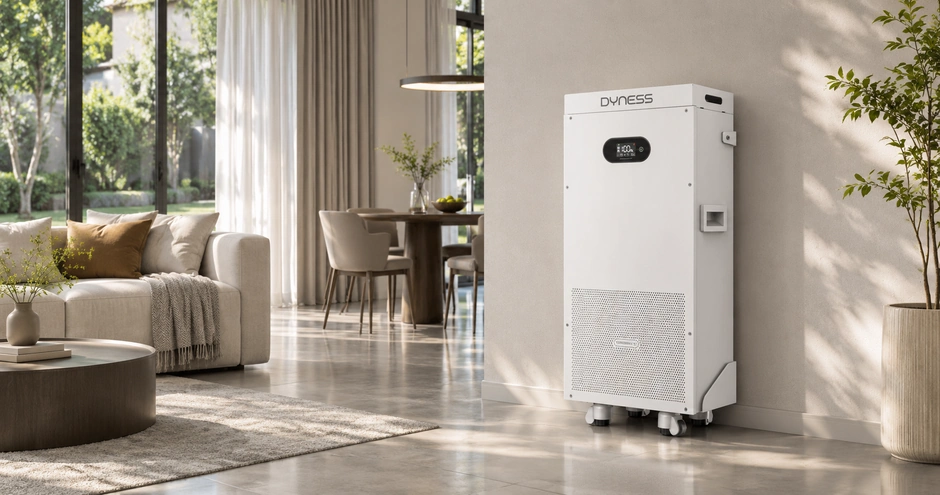
A home battery backup system must provide sufficient stored energy for the required operating period while supporting the electrical demand of connected appliances. Battery capacity, measured in kilowatt-hours (kWh), determines the amount of stored energy, while voltage and discharge current influence the power available at the battery's DC connection. These parameters must be evaluated separately when designing a backup power supply for home.
On the battery side, DC power is determined by voltage multiplied by current. For the same power demand, a lower battery voltage requires higher current. Since battery voltage changes during charging and discharging, a compatible inverter must support the battery's operating voltage range rather than only its nominal voltage. The inverter's conversion efficiency, continuous output rating, and short-duration power capability must also match the intended household loads.
For Low Voltage (LV) Solar Battery Storage, this relationship is particularly important when several appliances operate simultaneously. Continuous loads determine the sustained current requirement, while brief high-power events may introduce additional demands. A complete assessment should therefore consider battery-side current, inverter capability, available stored energy, and the duration of each operating condition.

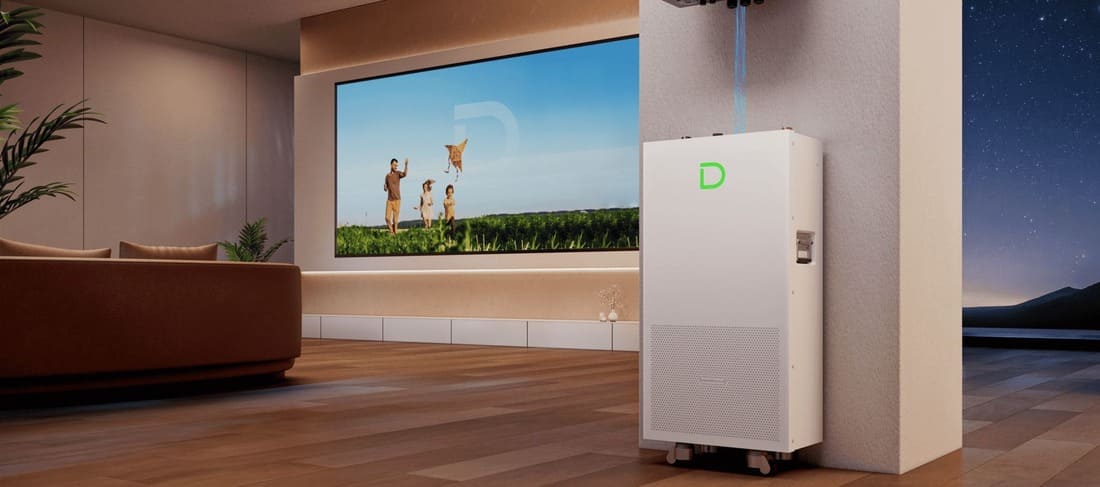
PowerBrick Pro: Battery Capacity and Electrical Specifications
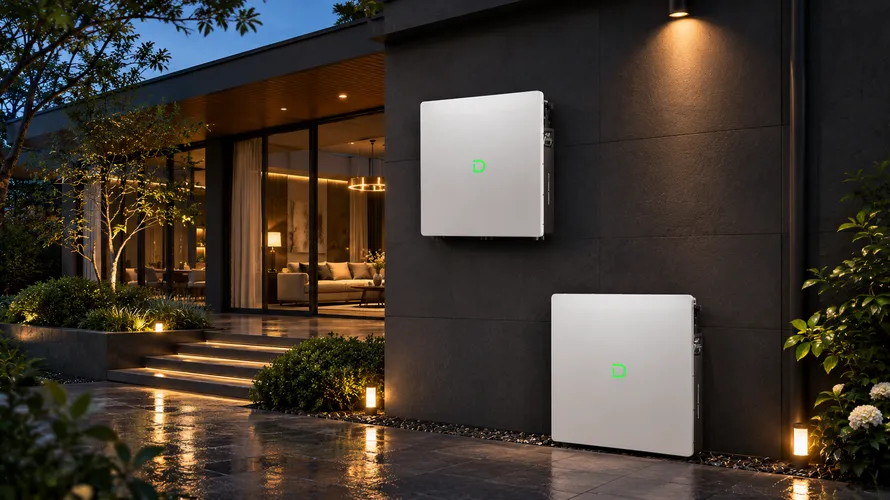
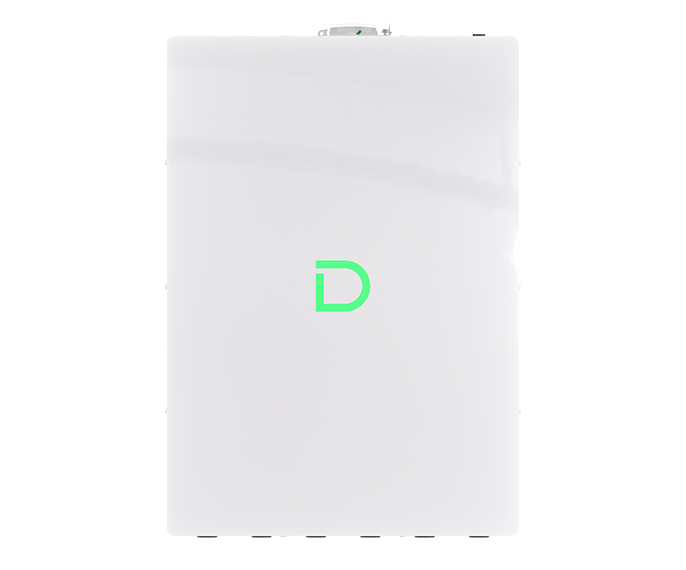
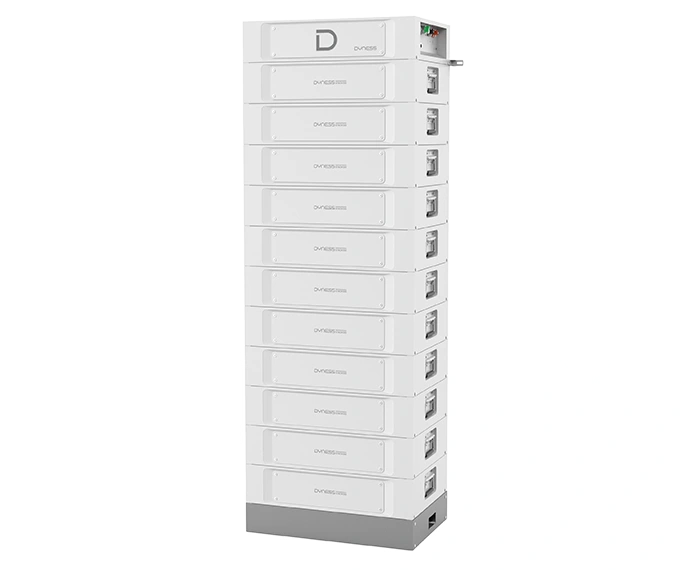
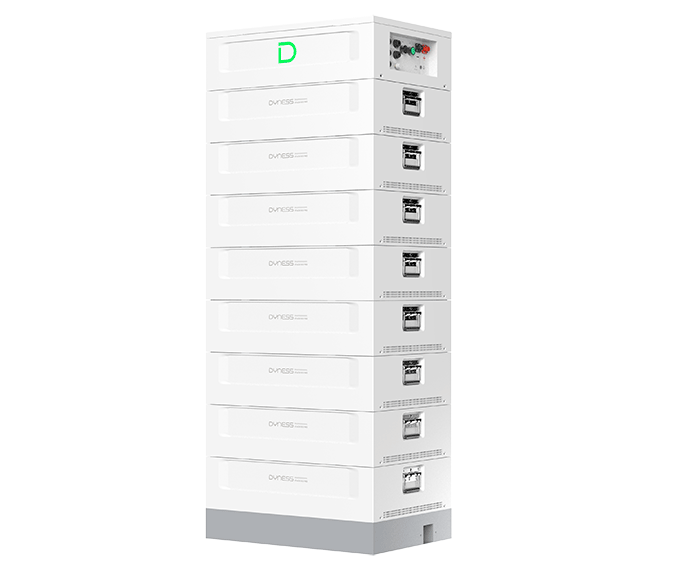
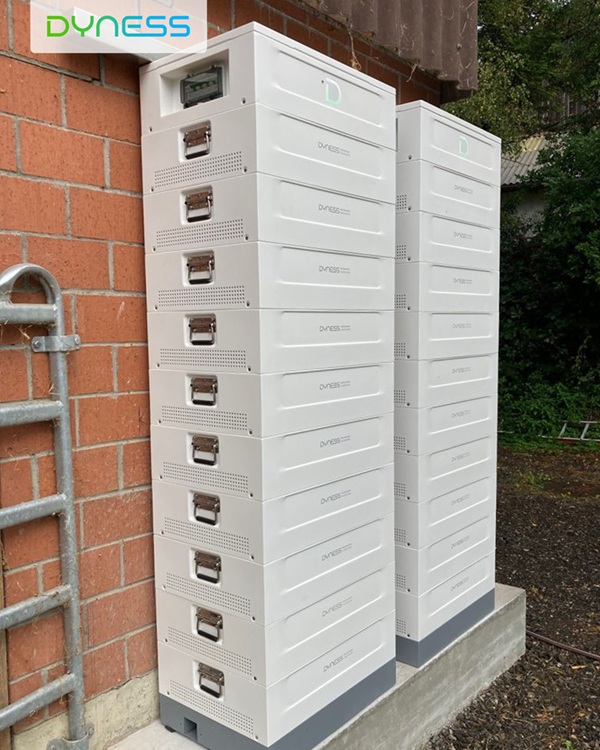
The Dyness PowerBrick Pro is a modular LiFePO4 battery designed for low-voltage energy storage applications. It provides 14.336 kWh of nominal energy capacity, a rated capacity of 280 Ah, and a nominal voltage of 51.2 V. Its battery operating voltage range is 44.8–57.6 V, which must be considered when matching the battery with an external inverter or power conversion system.
These specifications describe different aspects of battery performance. The 14.336 kWh rating represents nominal stored energy, the 280 Ah figure describes electrical charge capacity, and the 51.2 V nominal voltage identifies the battery's reference voltage. The actual voltage changes during operation, so system compatibility must be verified across the specified operating range.
When selecting a backup power supply for home, installers should evaluate the battery's electrical ratings alongside the connected inverter's supported DC voltage window, charging and discharging requirements, and AC output capability. Battery capacity alone cannot establish which household appliances can operate or how long backup power will remain available.
Continuous Discharge, Peak Current, and Battery Cycle Life
Battery discharge specifications should distinguish recommended operating current, maximum current, and short-duration peak current. The Dyness PowerBrick Pro specifies recommended charging and discharging at 0.5C, equivalent to 140 A. Its maximum charging and discharging currents are 200 A, while peak discharge current reaches 300 A for two minutes at 25°C. This peak rating applies to a specific discharge duration and temperature condition rather than continuous operation.
For home battery backup applications, these limits are important when evaluating the combined demand of household appliances. An appliance may require additional power briefly during startup, but a battery's peak discharge rating does not automatically establish the inverter's AC surge capability. Both battery-side current limits and inverter output specifications must be checked against the actual load requirements.
Battery cycle life also requires careful interpretation. PowerBrick Pro specifies at least 8,000 cycles under test conditions of 0.2C charging and discharging at 25°C with 95% depth of discharge (DOD). Its recommended DOD is 95%. These figures provide a defined basis for evaluating cycling performance, but the rated cycle count should not be interpreted as an unconditional guarantee of calendar lifespan under every operating environment.
Temperature Management and Multi-Layer Battery Protection
Environmental conditions can affect the performance and safety of Low Voltage (LV) Solar Battery Storage. The Dyness PowerBrick Pro specifies a standard charging temperature range of 0–55°C, while an optional low-temperature configuration extends the charging range to −20–55°C. Its discharge temperature range is −20–55°C. These limits must be distinguished because the ability to discharge at a low temperature does not automatically mean the battery can be charged under the same conditions without the appropriate configuration.
The PowerBrick Pro incorporates a Battery Management System (BMS) with protective functions addressing cell or pack undervoltage, overvoltage, charging and discharging overcurrent, temperature abnormalities, and short circuits. These mechanisms can restrict or interrupt operation when predefined limits are reached, helping protect battery components and the connected electrical system.
Additional protection features include an IP65-rated enclosure and an integrated aerosol fire-extinguishing system. Each protective function addresses a different operating condition and should be evaluated as part of the complete energy storage installation. Battery chemistry, BMS protection, environmental design, and professional installation all contribute to the overall safety architecture.
Monitoring, Inverter Compatibility, and Modular Expansion
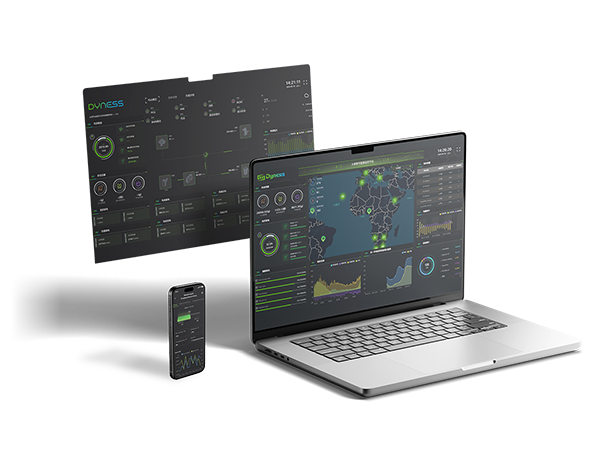
Reliable home battery backup operation depends on the ability to monitor equipment status and verify compatibility with external power conversion equipment. Dyness PowerBrick Pro supports CAN and RS485 communication, built-in Wi-Fi, and app-based over-the-air (OTA) updates. Its front-panel LED provides battery state-of-charge information and warning indications, helping users and technicians review relevant operating conditions.
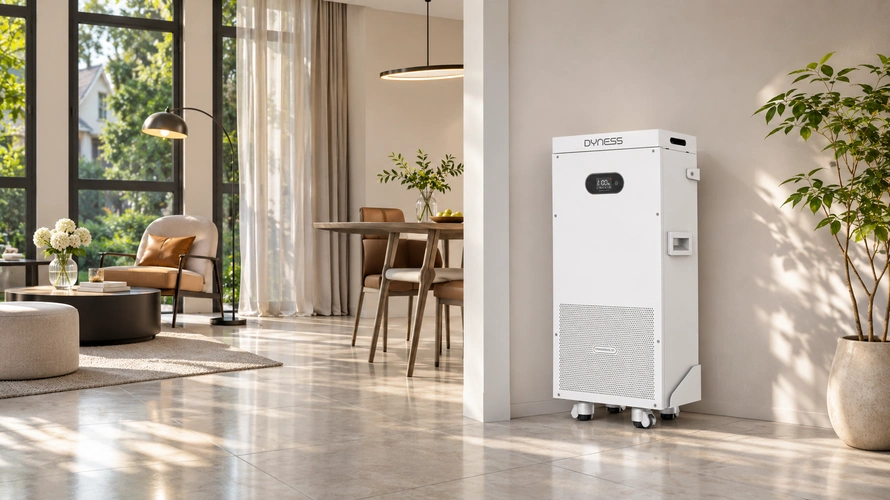
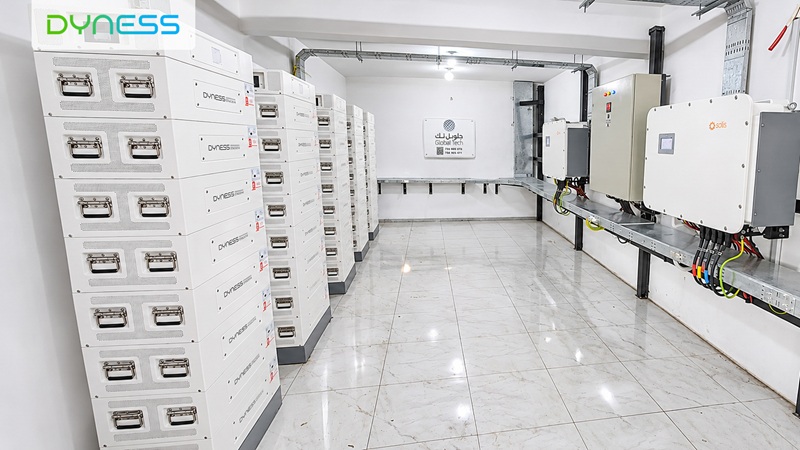
Modular capacity expansion provides additional flexibility for households with changing energy requirements. PowerBrick Pro supports up to 50 units in parallel, subject to the approved configuration and system integration requirements. Optional regulating wheels and a top cover provide additional physical configuration choices. The appropriate number of batteries should be determined by household energy demand, charging opportunities, inverter capability, and installation conditions rather than the maximum permitted parallel quantity alone.
Installation, operation, and maintenance should be handled by qualified, trained professionals. For a backup power supply for home, the complete system must include compatible conversion equipment and an appropriate backup arrangement. The battery's voltage range, discharge current limits, communication requirements, and protective functions should be verified against the actual inverter and connected household loads before the backup configuration is confirmed.
Conclusion
Choosing the right backup power supply for home requires evaluating more than battery energy capacity. Voltage compatibility, sustained discharge current, short-duration peak ratings, inverter output capability, operating temperature, and safety protection all influence whether a battery can support the intended household loads.
The Dyness PowerBrick Pro provides 14.336 kWh of nominal LiFePO4 storage, a 51.2 V low-voltage architecture, defined charging and discharging limits, integrated BMS protection, and modular expansion capability. By matching these specifications with compatible conversion equipment and professional system design, homeowners and installers can develop flexible residential backup solutions that reflect actual electricity demand and operating conditions.
FAQ
-
Q: What should I look for when choosing a backup power supply for home?
 A: Homeowners should evaluate usable battery capacity, nominal and operating voltage, recommended and maximum discharge current, peak discharge capability, inverter compatibility, operating temperature, and safety protection. Both sustained household demand and short-duration startup requirements should be considered when selecting a home battery backup system.
-
Q: What is the difference between maximum discharge current and peak discharge current?
A: Maximum discharge current describes the battery's specified discharge limit, while peak discharge current applies to a higher current under defined time and temperature conditions. For example, the Dyness PowerBrick Pro specifies a maximum discharge current of 200 A and a peak discharge current of 300 A for two minutes at 25°C. The peak rating should not be treated as a continuous operating rating.
-
Q: Can the Dyness PowerBrick Pro provide backup power during a grid outage?
A: PowerBrick Pro can be used as battery storage in a properly designed home backup system. Actual backup operation depends on compatible inverter equipment, switching arrangements, supported loads, and system configuration. The battery's 14.336 kWh nominal capacity does not independently determine AC output power, transfer time, or backup duration.
Learn More