




















Home Battery Backup Systems: What to Look For


Get notified about new updates, products, tips and tutorials. No spam.
Choosing a home battery backup system starts with identifying which household appliances and circuits need electricity during a power outage. Refrigeration, essential lighting, communications equipment, and other critical loads may require continued power, while less important appliances can be temporarily disconnected to extend backup duration.
A reliable residential battery backup solution must balance usable energy capacity, output power, voltage compatibility, transfer time, installation requirements, and system monitoring. Understanding these factors helps homeowners select storage equipment that matches their actual backup needs rather than relying on battery capacity alone.
Identify Essential Loads and Plan Backup Priorities
Home battery backup systems should be designed around the household appliances and circuits that need to remain powered during an outage. Essential loads may include refrigeration, lighting, communications equipment, security systems, and other critical devices, depending on the homeowner's requirements. Operating a limited number of essential appliances requires a different system configuration from supplying an entire household.
Before selecting battery capacity, homeowners and installers should identify which appliances operate continuously, which are used occasionally, and which may start simultaneously. Some appliances also require higher power for a short period during startup. Backup planning should therefore account for both instantaneous output demand and the intended supply duration. Maintaining an appropriate battery reserve is equally important, as energy used for routine solar self-consumption may otherwise be unavailable when an unexpected grid interruption occurs.
Match Battery Capacity, Output Power, and Household Voltage
Selecting a home battery backup system requires distinguishing stored energy from electrical output capability. Battery capacity, measured in kilowatt-hours (kWh), determines how much energy can be stored, while output ratings determine which appliances can operate simultaneously. Household circuits must also match the system's supported AC output voltage. Apparent power, measured in kVA, and real power, measured in kW, are related through the connected load's power factor.
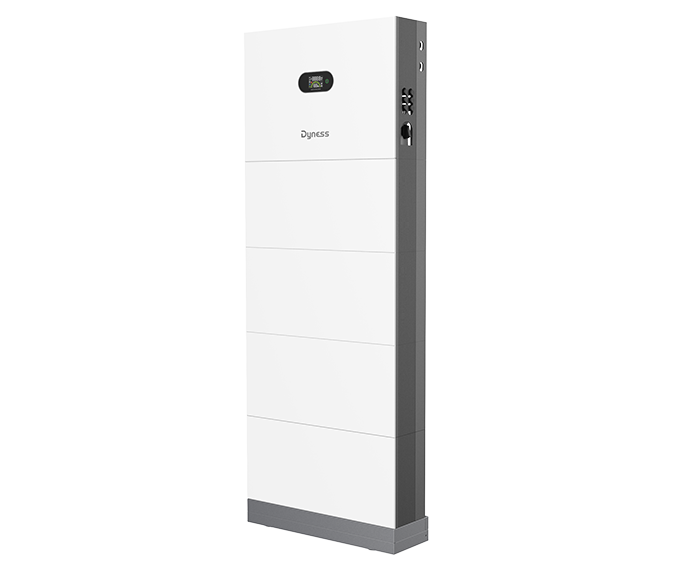
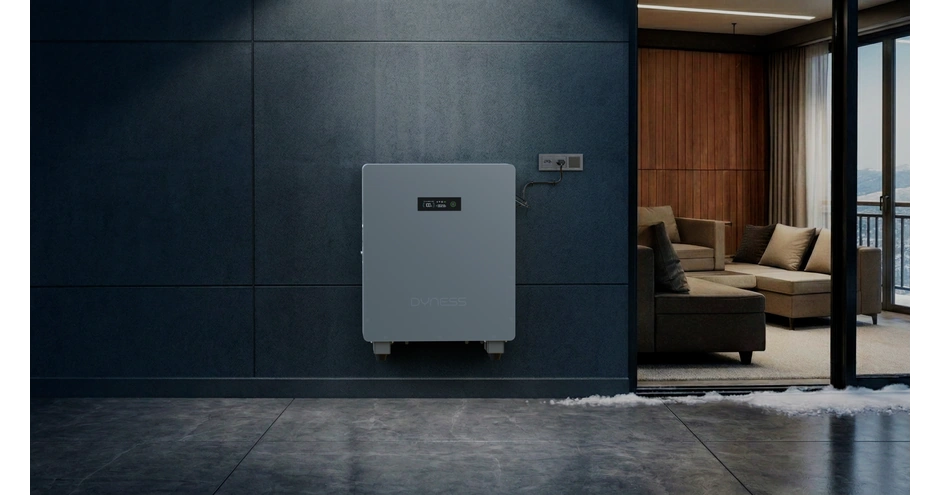
For Latin American residential applications, the Dyness AquaVolt-LV D3.6LXC-5 offers selectable 110 V, 127 V, and 220 V output modes, with corresponding continuous apparent power ratings of 1.7 kVA, 2.0 kVA, and 3.6 kVA. The system incorporates a 5.12 kWh battery with a nominal voltage of 51.2 V and a capacity of 100 Ah. Its battery-side operating range is 44.8–57.6 V, which must not be confused with the AC voltage supplied to household appliances. Matching these specifications to the actual circuits is essential when determining suitable backup coverage.
Evaluate Transfer Time and Short-Duration Power Requirements
Power outages introduce two separate technical requirements: the transition from grid supply to backup operation and the ability to support connected appliances after the transition. The Dyness AquaVolt-LV provides a transfer time of no more than 10 ms. However, this rating alone does not guarantee uninterrupted operation for every sensitive electronic device, as actual continuity also depends on equipment requirements and the complete installation configuration.
AquaVolt-LV also provides short-duration maximum apparent power ratings of 2.0 kVA at 110 V, 2.3 kVA at 127 V, and 4.0 kVA at 220 V for one minute. These ratings are distinct from its continuous output capabilities and should not be used as sustained power specifications. Maximum AC charging power is separately specified at 1.7 kW, 2.0 kW, and 3.5 kW for the corresponding voltage modes. Homeowners should verify both continuous and short-duration requirements when determining whether the selected system can support essential appliances during an outage.


Understand Backup Duration and Battery Operating Conditions
Backup duration depends on the usable energy available in the battery and the actual electricity consumption of connected appliances. A larger battery may support longer operation, but runtime is also affected by conversion losses, reserve settings, discharge limits, and changing household loads. Nameplate capacity alone cannot establish how many hours a particular home will remain powered.
The Dyness AquaVolt-LV features a 5.12 kWh battery with a specified depth of discharge of 95% and natural cooling. These characteristics help define the battery's operating parameters but should not be interpreted as a guaranteed household backup duration. For more accurate planning, installers should combine the selected AC output mode, usable energy requirements, continuous load demand, and temporary startup loads. Homeowners can also improve backup utilization by prioritizing essential appliances and reducing unnecessary electricity consumption during grid interruptions.
Check Installation Compatibility, Safety, and Monitoring
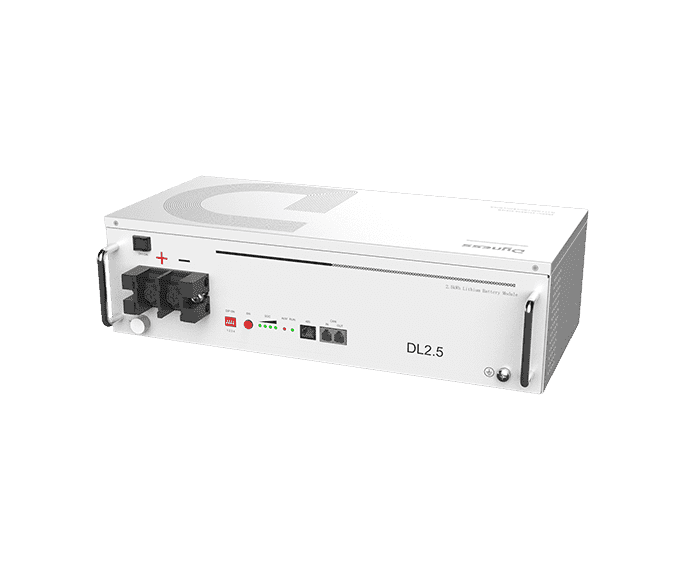
Reliable residential solar battery storage requires equipment-specific compatibility checks and professional installation where applicable. The Dyness AquaVolt-LV supports plug-in or fixed-wiring AC connection options and features IP65-rated protection with a unit weight of 67.5 kg. Its installation method must comply with the approved product configuration and applicable local electrical requirements. A separate solution such as Dyness PowerBox G2 requires compatible inverter parameters and verification of battery-side discharge current requirements. PowerBox G2 should not be assumed to share AquaVolt-LV's output modes or transfer-time specifications.
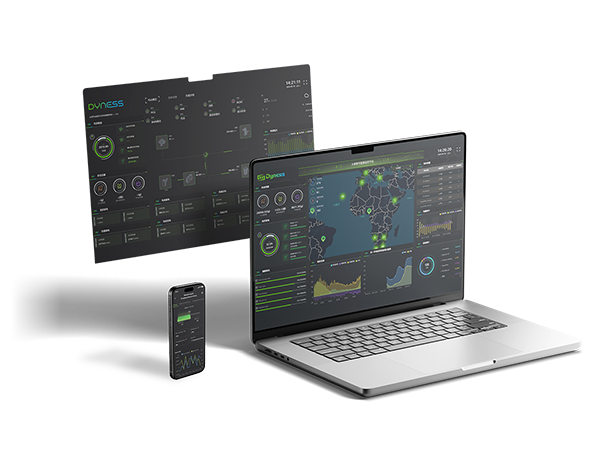
Monitoring capabilities are also important for long-term operation. AquaVolt-LV provides LCD, app, and web monitoring through supported Wi-Fi, Bluetooth, and RS485 communication interfaces. Users can review battery power, current, charging and discharging status, and household consumption information. These functions help homeowners understand system operation, although connectivity and remote access during an outage depend on the availability of the relevant communication infrastructure. Installation, commissioning, and electrical integration should be completed by appropriately qualified personnel in accordance with the applicable product requirements.
Conclusion
The best home battery backup system is not necessarily the one with the largest storage capacity. Effective backup planning begins with identifying essential household loads and matching them to the correct battery capacity, output power, voltage configuration, transfer capability, and operating conditions.
Solutions such as the Dyness AquaVolt-LV offer different output voltage options, defined continuous and short-duration power ratings, and integrated monitoring functions for residential applications. By evaluating actual appliance requirements, available backup energy, installation compatibility, and operational priorities, homeowners can select a residential solar battery storage solution that provides practical and clearly defined backup coverage during grid interruptions.
FAQ
-
Q: How do I choose the right home battery backup system?

A: Start by identifying essential household appliances, their combined power requirements, expected backup duration, and supported operating voltage. Then evaluate usable battery capacity, inverter output, transfer time, installation compatibility, and monitoring features.
-
Q: Does a 10 ms transfer time guarantee uninterrupted power for all appliances?
A: No. A transfer time of 10 ms describes the system's switching capability, but sensitive equipment may have different power continuity requirements. Actual operation depends on the connected devices, output configuration, and complete backup system design.
-
Q: What output voltage and power options does the Dyness AquaVolt-LV support?
A: The Dyness AquaVolt-LV D3.6LXC-5 supports selectable 110 V, 127 V, and 220 V AC output modes, with corresponding continuous ratings of 1.7 kVA, 2.0 kVA, and 3.6 kVA. The correct configuration depends on household electrical requirements and the approved installation arrangement.
Learn More