






















When Is It Worth Adding a Battery to a Balcony Solar System?


Get notified about new updates, products, tips and tutorials. No spam.
Balcony PV systems do not always allow households to consume all generated electricity when it is produced. Some users therefore consider storing surplus daytime energy for later use.
A battery is not essential for every household. Whether it is worthwhile depends on surplus PV generation, household usage patterns, and battery cost.

Core Explanation
Balcony PV systems generally generate electricity during the day. If household consumption is low at that time, some generation may not be used immediately. A battery can store eligible surplus energy and discharge it later, increasing PV self-consumption.
If only a refrigerator and router run during the day while cooking, lighting, and electronic devices are used more heavily in the evening, surplus daytime PV energy may be useful later. If nearly all PV generation is consumed immediately, little surplus may be available to charge a battery.
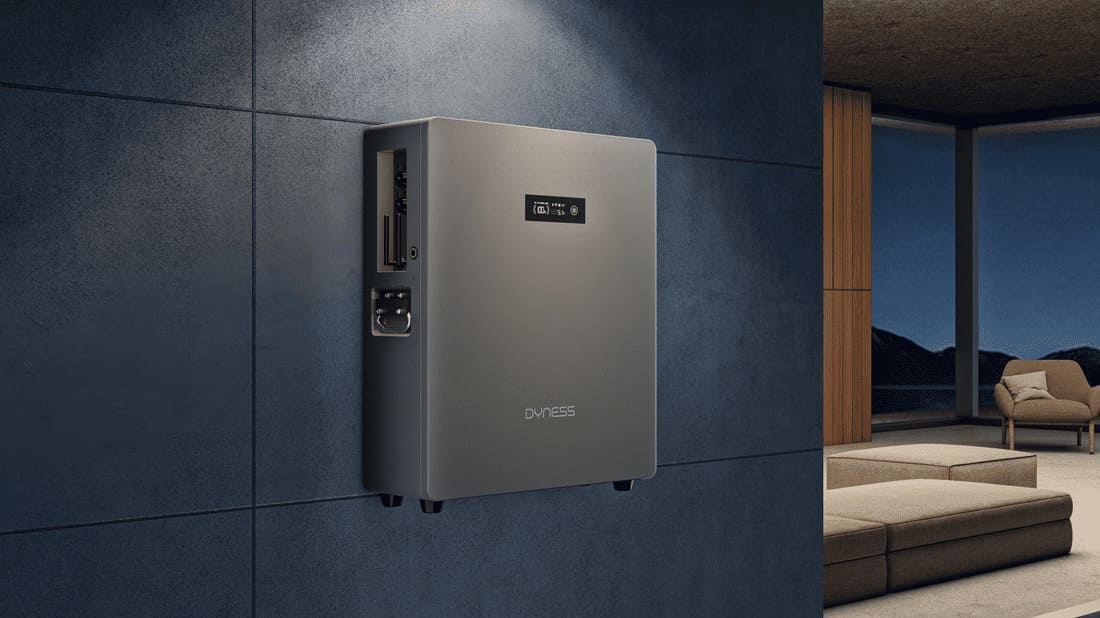
Assess the value of a battery using actual generation profiles, household loads, usable stored energy, conversion losses, and total investment—not just the rated power of the PV panels. AquaVolt, as a Plug-in All-in-one ESS, is designed for households looking for a simple, integrated installation experience. SolarCube 2, as a Plug-in Stackable ESS, supports modular capacity expansion, allowing homeowners to increase storage capacity over time as their energy needs evolve.
Key Factors
- The amount of surplus PV energy available during the day
- Household electricity use across daytime and nighttime
- Whether battery capacity and charging/discharging power are appropriately matched
- System cost, efficiency, and expected service life
- Local electricity prices, export tariffs, or compensation schemes

Misconceptions / Edge Cases
Misconception: Every balcony PV system is worth pairing with a battery
→ Reality: If surplus energy is limited, battery utilization may be low. Assess actual generation and loads first.
Misconception: A larger battery always saves more money
→ Reality: Without sufficient surplus energy or nighttime demand, a large battery may be underused.
Misconception: Every stored kilowatt-hour completely replaces grid electricity
→ Reality: Charging and discharging involve losses, so the reduction in grid purchases is generally lower than the energy charged.
Misconception: Battery capacity alone determines whether it pays off
→ Reality: Power, operating strategy, tariffs, and equipment costs also matter.
Suitability & Unsuitability
Suitable scenarios:
- Households that frequently have daytime surplus PV energy and still buy grid electricity at night
- Users seeking to improve PV self-consumption
- Households able to match battery capacity to actual surplus generation
Not suitable scenarios:
- Homes that consume nearly all PV generation during the day
- Homes with very low nighttime demand and little opportunity to use stored energy
- Cases where local tariffs and compensation rules do not support a reasonable return
Conclusion
A battery is most valuable when it can regularly store PV energy that would otherwise go unused and later replace some grid electricity.
Before purchasing, review household generation and consumption data, then evaluate storage cost, system efficiency, and local tariffs instead of simply choosing the largest battery.
FAQ
-
Q: Does a balcony energy storage system require daily manual operation?

A: Usually not. Modern balcony storage systems are designed with automatic energy management. After setup, the system can manage charging and discharging based on solar generation, household demand, battery status, and selected operating mode.
-
Q: Do I need an electrician to install a balcony energy storage system?
A: Some compact plug-in balcony storage systems are designed for easier installation. However, if the system has higher power, larger capacity, special wiring needs, or local grid requirements, professional installer or electrician support is recommended.
-
Q: Why do many households still buy electricity at night even with solar panels installed?
A: Because solar panels require sunlight and naturally hit peak generation during midday, whereas typical household electrical demand peaks after sunset. Without a storage buffer, the two timelines never align.
Learn More